
Key takeaways
- A Sur-Ron suspension setup starts with sag: aim for roughly 28-35% of rear travel and 28-33% of front travel with the rider aboard in gear.
- Preload sets ride height and sag, compression controls how fast the suspension collapses, and rebound controls how fast it springs back.
- Set your baseline by rider weight first, then make one adjustment at a time so you can feel what each change does.
- Harsh jolts, bottoming out, a packing-down feel or a bike that wallows in corners are the clearest signs your suspension needs adjustment.
- Hard enduro, fast trail and big jumps each want a different balance, so re-tune for the riding you actually do.
A good Sur-Ron suspension setup comes down to three adjustments done in order: set preload so your sag is right for your weight, then tune compression and rebound damping for the terrain you ride. Get the sag close first, change one thing at a time, and write down every click so you can always find your way back.
Suspension is the part of a Sur-Ron that separates a bike you fight from a bike that works with you. The motor and battery get most of the attention, but on rough ground it is the fork and shock that decide whether you stay in control. This guide walks through what each adjuster does, how to build a baseline from your rider weight, and how to shift that baseline for enduro, trail and jumps.
Understanding Preload, Compression and Rebound
Three controls do most of the work in any dirt bike suspension setup. Learn what each one changes and the rest becomes logical.
Preload is the tension on the spring before any weight hits it. More preload raises the bike and reduces how far it sinks when you sit on it. Less preload lowers the bike and lets it settle deeper. Preload does not make the spring stiffer, it only changes the starting point. Its main job is setting ride height and sag.
Compression damping controls how fast the suspension collapses when it hits a bump. Too little and the bike dives and bottoms out on hard hits. Too much and the ride feels harsh because the fork and shock cannot absorb sharp edges fast enough.
Rebound damping controls how fast the suspension extends again after it compresses. Too little rebound and the bike feels springy and kicks back at you. Too much and the suspension "packs down", staying compressed through a series of bumps and leaving no travel for the next one.
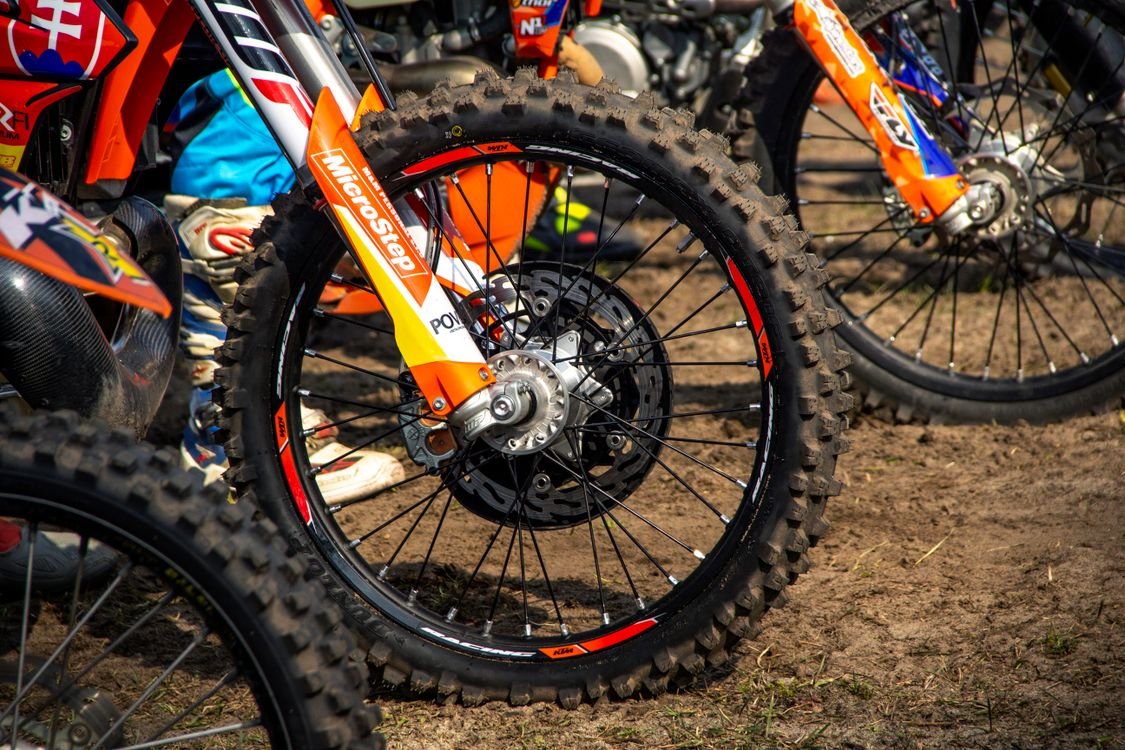
Most Sur-Ron forks and shocks expose compression and rebound as clicker adjusters, usually counted in clicks from fully closed. Always set them by counting clicks from a known end point, not by eye.
Sur-Ron Suspension Setup Baseline by Rider Weight
Every setup starts with sag, the amount the suspension settles under your weight. Sag is set with preload and it is the single most important number in your setup because the spring has to match the person on the bike.
There are two measurements:
- Static sag is how far the bike sinks under its own weight, with no rider.
- Rider sag (often called race sag) is how far it sinks with you seated in full gear. This is the number that matters most.
For a dirt bike, the widely used starting target from suspension specialists Race Tech is about 28 to 35 percent of total travel at the rear and 28 to 33 percent at the front, measured with the rider aboard (Motorcycle Classics, citing Race Tech). On a Sur-Ron Light Bee, with its long-travel fork and linkage rear, that works out to roughly 55 to 70mm of rear rider sag as a place to begin.
To measure rider sag at the rear:
- Put the bike on a stand so the rear wheel hangs free and measure from the axle to a fixed point on the rear fender. Call this the fully extended length.
- Take the bike off the stand, sit on it in full gear, feet on the pegs, and have a helper hold you upright. Measure the same two points again.
- The difference is your rider sag. If it is too large, add preload. If it is too small, back preload off.
Do the front the same way, measuring along the fork. Heavier riders will often run out of preload adjustment and still sag too much, which is the clearest sign you need a stiffer spring rather than more preload. If you are new to all this, our guide on whether the Sur-Ron is good for beginners covers how forgiving the stock setup is before you start changing anything.
Tuning for Enduro, Trail and Jumps
Once sag is set, damping is where you tailor the bike to your riding. Change one clicker at a time, ride the same section of trail, and note what you felt. The terrain decides the balance.
Enduro and Technical Trails
Slow, rocky, root-covered enduro riding rewards a plusher setup. Soften compression a few clicks so the suspension soaks up square edges and keeps the tyre on the ground for traction. Keep rebound slightly on the slower side so the bike stays settled, but not so slow that it packs down over repeated hits. Grip matters more than big-hit control here, and tyre choice works alongside your suspension, so it is worth reading our notes on choosing the right tyres for your Sur-Ron when you tune for technical ground.
Fast Trail Riding
Faster, flowing trails with braking bumps and ruts want a firmer compression setting to resist diving under braking and to hold the bike up in its travel. Set rebound so the suspension recovers quickly between bumps without kicking. The goal is a planted, predictable bike you can lean on at speed.
Jumps and Hard Hits
Jumping asks the most from your suspension. Add compression damping and, if you are bottoming on landings, preload or a stiffer spring, so the bike resists blowing through its travel. Rebound needs to be controlled so the bike does not spring back and buck you on landing, but not so slow that it stays compressed into the next obstacle. Big hits are where under-sprung suspension shows up fastest.
Signs Your Suspension Needs Adjustment
Your bike tells you when the setup is wrong. Learn to read these signals before reaching for the clickers.
- Harsh, jarring ride over small bumps. Usually too much compression damping, or too much preload raising the bike out of its comfortable range.
- Bottoming out with a hard clunk. Not enough compression, not enough preload, or a spring too soft for your weight.
- A kicking or springy feel after bumps. Too little rebound damping letting the suspension snap back.
- A "packing down" sinking feel over a series of hits. Too much rebound, so the suspension cannot recover between bumps and runs out of travel.
- Wallowing or vagueness in corners. Often too much sag front or rear, upsetting the bike's balance.
Suspension problems and worn parts can hide inside each other, so a loose linkage or tired fork seal can mimic a tuning issue. Working through a regular Sur-Ron maintenance checklist before you chase settings saves you from tuning around a mechanical fault.
Upgrade Options for Serious Off-Road Use
The stock Sur-Ron suspension handles trail and moderate enduro riding well once it is set up properly. Beyond that, hardware upgrades are where real gains come from.
- Correct-rate springs. The most cost-effective upgrade. If you are much heavier or lighter than average, a spring matched to your weight transforms the bike more than any clicker ever will.
- Upgraded fork internals or a full aftermarket fork. Riders pushing into hard enduro and bigger jumps often fit cartridge upgrades or a stronger fork for more consistent damping and resistance to bottoming.
- Aftermarket rear shock. A quality replacement shock adds adjustability and better heat control for long, demanding rides.
- Linkage and bushing refresh. Fresh bearings and bushings keep the rear acting the way your settings intend.
If you are building toward a serious off-road machine, suspension sits alongside other common improvements, and our roundup of the best upgrades for the Sur-Ron Light Bee puts those choices in order of priority. Surronbikes can also point you to the right model and parts for the riding you plan to do, so your suspension spend matches the rest of the bike.
Where to Start
Before your next ride, set your rear and front sag with you seated in full gear, write the numbers down, and leave the clickers at their factory baseline for the first lap. Then change one thing, ride the same trail, and judge the difference. A methodical Sur-Ron suspension setup built one adjustment at a time will always beat a pile of guesses, and it costs nothing but an afternoon.
Frequently asked questions
What is a good starting sag for a Sur-Ron?
Use the standard dirt bike method: set rear sag to about 28-35% of total rear travel and front sag to about 28-33% of front travel, measured with you seated in full riding gear. Adjust preload from there.
Do I need special tools to set up Sur-Ron suspension?
You need a tape measure, a helper to hold the bike, and the adjusters that came with your fork and shock. Preload rings may need a spanner or punch. A notebook to log clicks is the most useful tool of all.
Can I tune the stock Sur-Ron suspension or do I need upgrades?
The stock Light Bee suspension responds well to sag and damping adjustment for most trail and casual enduro riding. Heavier riders, serious hard enduro, and big jumps are where upgraded springs or aftermarket forks and shocks start to pay off.
How often should I check my suspension settings?
Recheck sag whenever your riding weight changes, after any crash or hard landing, and at the start of each season. Log your clicks so you can always return to a known baseline.