
Key takeaways
- The Light Bee X claims up to 75 km at 40 km/h in eco mode, but hard trail riding often lands in the 40 to 60 km range.
- In one independent test, a 2025 Ultra Bee covered 20 miles in full sport mode and still held 8 percent battery.
- Terrain, rider weight and power mode matter more than any headline spec. Steep, technical ground can cut distance by half.
- Riding in a lower power mode, keeping tyre pressure right and planning charge points are the simplest ways to extend a single charge.
A Sur-Ron will usually take you between 40 and 70 km on a single charge, depending on the model, the ground and how hard you twist the throttle. The headline range figures printed on spec sheets are real, but they are measured in gentle conditions that look nothing like a technical enduro loop. This guide explains Sur-Ron range in plain terms: what each model claims, what riders actually see on the trail, and how to stretch a charge further.
Range is the question almost every new owner asks first, and it is easy to get a misleading answer. A number quoted at a steady 40 km/h on flat ground tells you very little about a steep, rocky climb with a 90 kg rider on board. Understanding the gap between those two situations is the key to planning any ride with confidence.
Why Is Claimed Sur-Ron Range So Different From Real Range?
Claimed range comes from controlled testing at a constant, moderate speed on easy ground, which flatters every electric dirt bike. The Light Bee X, for example, is quoted at up to 75 km at 40 km/h in eco mode on its official specification. Few people ride that way on a trail, so the number you see in a brochure is best read as a ceiling rather than an expectation.
Real riding introduces hills, acceleration, braking and rough surfaces, each of which pulls extra current from the pack. The same bike that shows 75 km on paper might deliver closer to 45 km when you are actually enjoying it. That is not a fault. It is simply the difference between a lab figure and a working one.
A useful habit is to mentally discount any claimed figure by a third for trail use, and by half for steep, technical riding. Plan around that lower number and you will rarely be caught out.
How Do Terrain, Weight and Riding Mode Affect Distance?
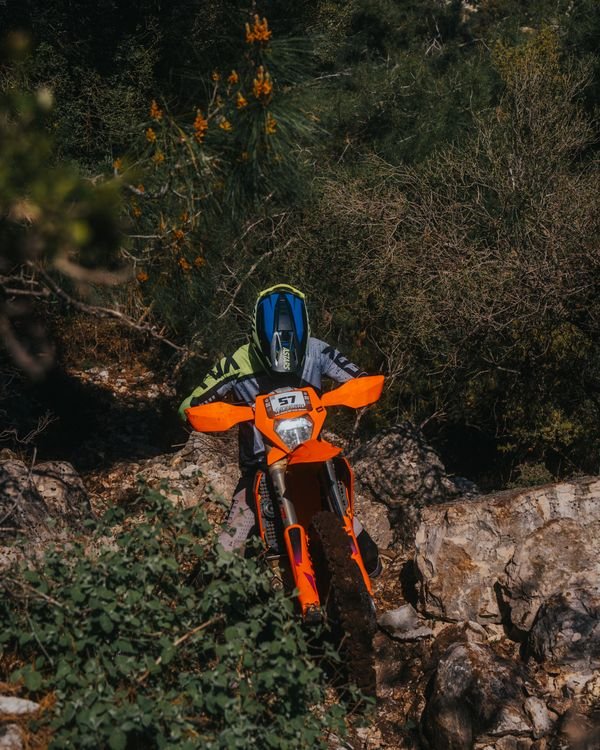
Terrain, rider weight and power mode are the three biggest levers on electric dirt bike range, and they often matter more than the size of the battery. Loose sand, mud and steep climbs force the motor to work harder for every metre, so energy drains faster. A heavier rider has the same effect, since more mass needs more power to move and lift.
Riding mode is the lever you control most directly. Eco or lower power settings cap output and smooth the throttle response, which stretches range considerably. Full sport mode unlocks the bike's real character but empties the pack much quicker.
Terrain
Flat fire roads are kind to range. Technical singletrack, rock gardens and sustained climbs are not. On demanding ground it is realistic to lose a third to half of your gentle-riding distance.
Rider weight and load
Every extra kilogram, whether it is the rider, a backpack or luggage, costs a little range. It is rarely dramatic on its own, but it adds up over a long, hilly loop.
Power mode
Switching down a mode is the fastest way to add range without changing anything else about your ride. Many owners keep the bike in a middle setting for general trail use and save full power for short, fun bursts.
What Range Do the Light Bee, Ultra Bee and Storm Bee Deliver?
Each Sur-Ron model sits in a different place on the range scale, driven mainly by battery size. The entry Light Bee X carries a 60V 40Ah pack rated at 2,400Wh and is quoted at up to 75 km in eco mode (Sur-Ron). It is light, nimble and the most popular choice for trail and trials-style riding across Europe.
The Ultra Bee steps up with a larger battery and noticeably more real-world staying power. In an independent test, a 2025 Ultra Bee ridden in full sport mode on Colorado singletrack covered 20 miles and still showed 8 percent battery remaining (Electric Cycle Rider). Ridden more gently, the same bike will go considerably further, which shows how much mode and terrain swing the result.
The Storm Bee is the heavyweight of the lineup. It carries the largest pack and the most power, aimed at riders who want performance closer to a traditional petrol enduro. Its bigger battery gives it the most headline range, though its extra weight and power mean aggressive riding still eats into that figure quickly.
If you are weighing up the two most popular models for the way you actually ride, our guide on the Sur-Ron Light Bee vs Ultra Bee breaks down where each one makes sense.
How Can You Squeeze More Kilometres From a Single Charge?
Small changes to how you ride and set up the bike can add a meaningful chunk of range, often more than owners expect. The single most effective step is to drop into a lower power mode for general riding and only call on full power when you really want it. That alone can be the difference between finishing a loop and pushing the last kilometre.
A few habits work well together:
- Keep the bike in eco or a middle power mode for cruising and climbs.
- Run correct tyre pressure, since soft tyres increase rolling resistance.
- Brake and accelerate smoothly rather than in sharp bursts.
- Carry only the weight you need for the ride.
- Keep the battery healthy, since a tired pack holds less charge.
Battery condition quietly shapes every ride. A well looked after pack delivers close to its rated capacity for years, while a neglected one fades. Simple charging and storage habits, like avoiding long spells at full or empty charge, protect range over the long term.
How Do You Plan Longer Off-Road Trips Without Range Anxiety?
The reliable way to avoid range anxiety is to plan around your realistic figure, not the claimed one, and to build in a margin. Work out roughly how far your bike goes in the conditions you ride, then plan routes that stay comfortably inside that, ideally with a charge point or spare battery in reach for longer days.
For bigger adventures, a removable battery changes the maths completely. Carrying a charged spare, or planning a loop that passes a power socket for a top-up stop, turns a 50 km bike into an all-day machine. A short break while the pack charges is a small price for peace of mind.
It also helps to know your bike's behaviour at low charge. Some riders find performance tapers as the pack nears empty, so planning to arrive back with a buffer of 15 to 20 percent is sensible on remote trails. If you are still choosing a model for the trips you have in mind, the team at Surronbikes can match a bike and battery option to the kind of riding and distances you are planning across Europe.
Frequently asked questions
What is the real range of a Sur-Ron Light Bee?
Sur-Ron claims up to 75 km at a steady 40 km/h in eco mode. In mixed trail riding most owners report somewhere between 40 and 60 km, with aggressive off-road use pulling the lower figure down further.
Why is my Sur-Ron range lower than the claimed figure?
Claimed range is measured at a moderate, constant speed on easy ground. Steep climbs, loose terrain, a heavier rider and full power mode all draw more current, so real-world distance is usually well below the headline number.
Does riding mode really change how far a Sur-Ron goes?
Yes. Eco or lower power modes limit output and smooth power delivery, which noticeably extends range. Full sport mode delivers maximum performance but drains the pack faster, sometimes cutting distance by a third or more.
How can I get more range from one Sur-Ron charge?
Ride in a lower power mode, keep tyre pressure correct, avoid constant hard acceleration, carry less weight where possible and keep the battery healthy. Planning a charge stop on longer loops removes most range anxiety.